Project Background
The larger project that gives rise to this digital platform is an in-progress book manuscript on sabīls in Cairo, Egypt. Sabīls are a key location for exploring vernacular water architecture and investigating the underlying conceptual frameworks that give them life. They are important parts of the built environment of Cairo, drawing on religious precedence and enacting everyday ethical notions of reciprocity. They are particularly important in the changing environmental conditions of Cairo and point to the ways in which vernacular and small-scale water infrastructure can add to the picture of urban water resilience in the context of climate change.
The city of Cairo, Egypt has a long history of sabīls that form an integral part of the urban landscape, the first of which were historic buildings where sabīls were co-located with kuttab, centers for Islamic education. These sabīl-kuttab were primarily established during the Mamluk and Ottoman periods and several have undergone restoration in the 20th and 21st centuries (ElDidi and Corbera 2017; Mostafa, 1989). Historically, sabīls were placed at junctions along pilgrimage routes in order to provide water for travelers to drink, and for passersby to supply themselves for daily activities. The sabīls that are the focus of this research are the contemporary vernacular forms of charitable water fountains: Kūldaīr, Ula, Zeer, and Kūlmān.
Water itself is seen as a key element of the composition of all living things, and the crucial component of god’s divine creations, drawing on sura al-anbiya’ (21) “And We made every living thing of water.” Moreover, water is powerful in the imagery and everyday practice of spirituality, being vital to material and spiritual purification. The importance and value of sharing water is reiterated in a number of suras and hadith, and individuals draw on these ideas in their decisions to set up sabīls. Sabīls can be established as an act of kheir or sadaqa jariya (perpetual charity), so intended primarily as a good general deed or as a good deed that has a specific target for the spiritual benefits, that of the soul of a deceased loved one. The establishment of a sabīl enables the accumulation of hasanāt, or merits accrued with god, in the Islamic tradition and are one of a limited set of posthumous avenues through which souls can shift the balance that they take with them to judgment day. As such, people often create sabīls as a way of building towards a future afterlife for themselves and departed loved ones.
Project Goals
The goal of this project is to curate a web-based multimedia site to document and share information about sabīls. There is very little research about sabīls in English, and what does exist focuses almost exclusively on sabīl-kuttab buildings from the Mamluk and Ottoman periods (writing in art history, architecture, and historic preservation, for example). These are important objects of attention, but this research on vernacular sabīls has shown how important these forms are in the material and ethical landscape of the city. This digital platform is intended to share information about sabīl-keeping practices in Cairo, a place to incorporate information from scholars across the region, and to do outreach and education about this unique and enduring practice. This digital platform is an integral part of the larger research project, and an important extension of the book manuscript.
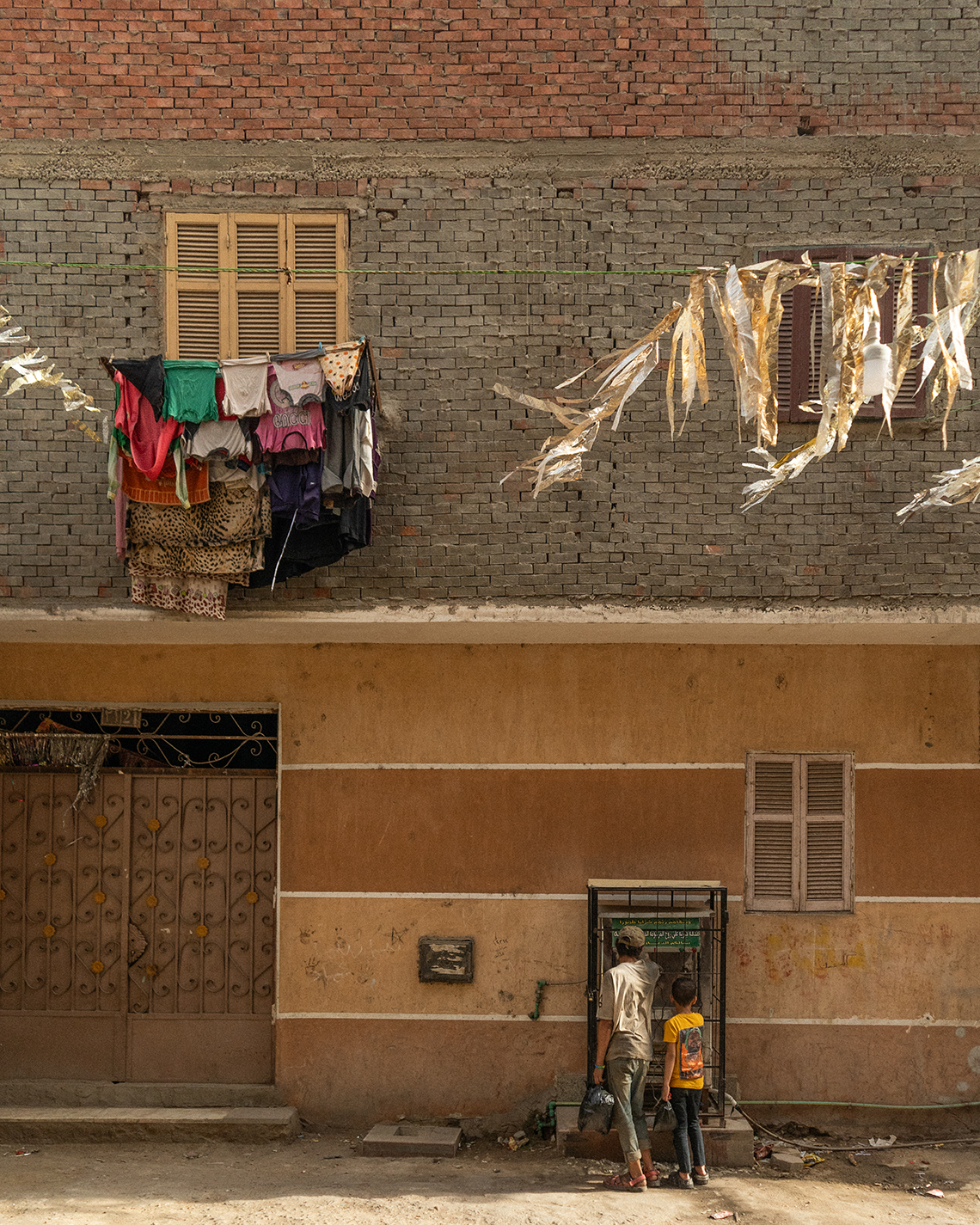 Photography by Francisca Reis.