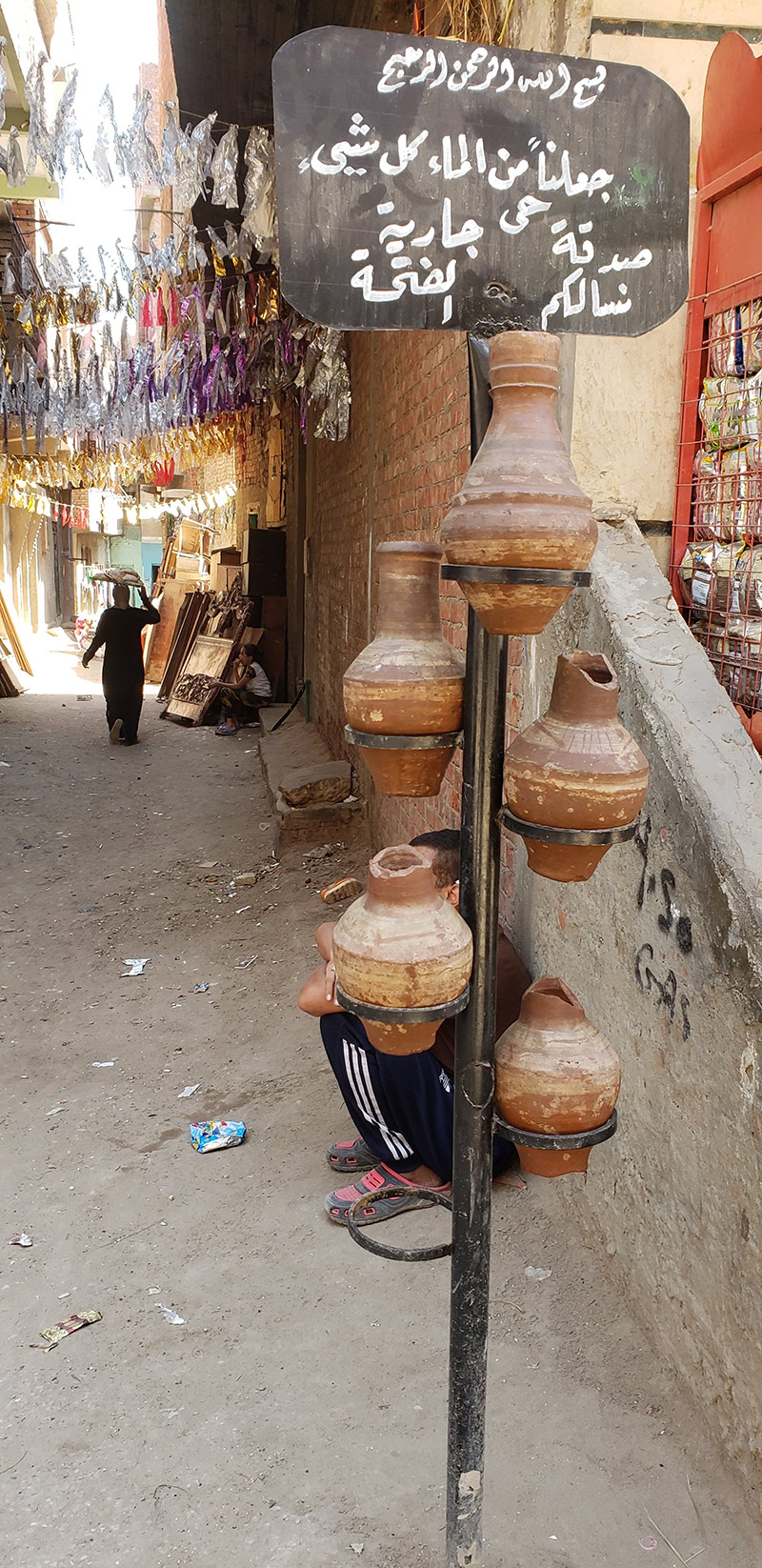
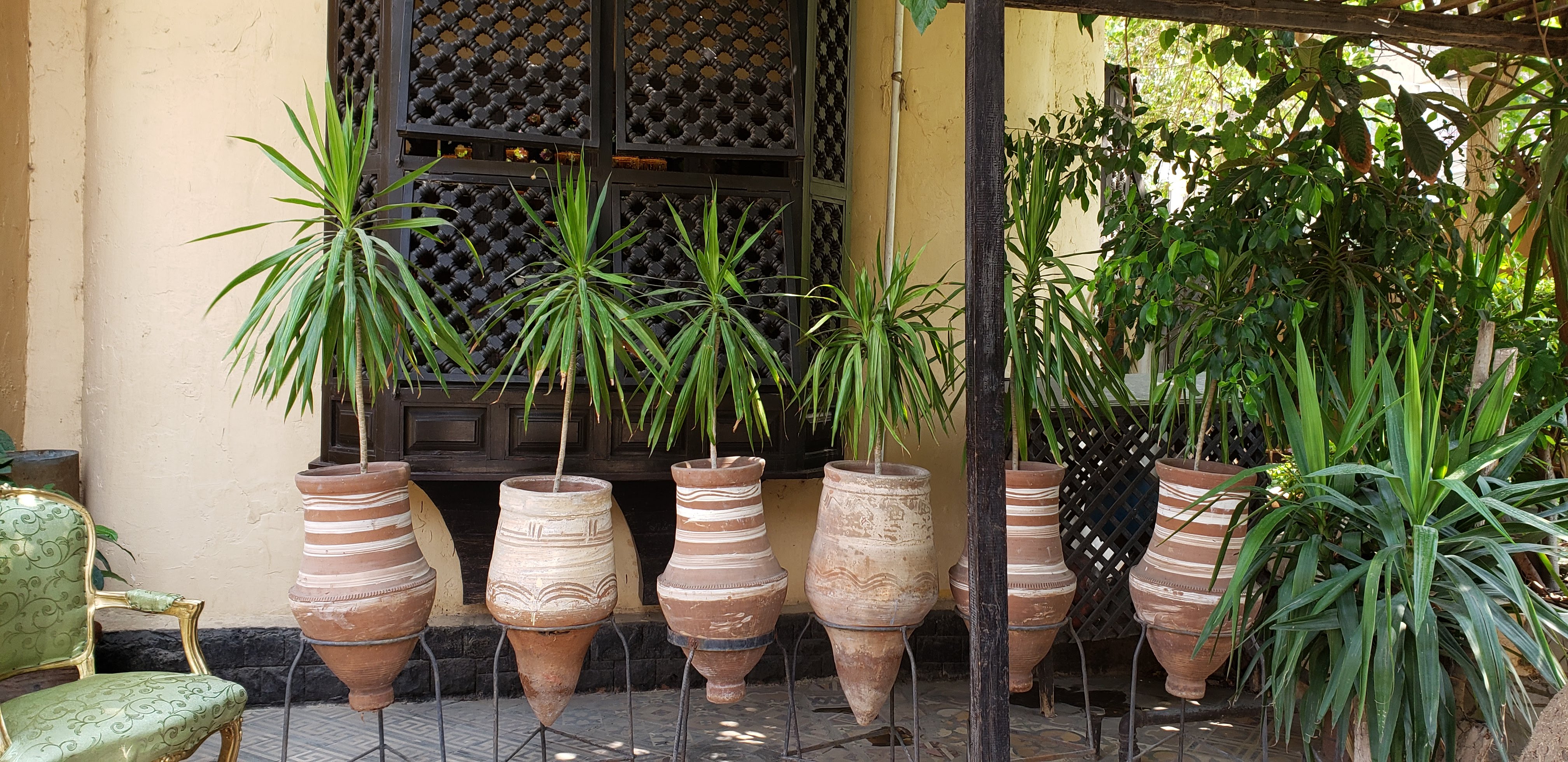
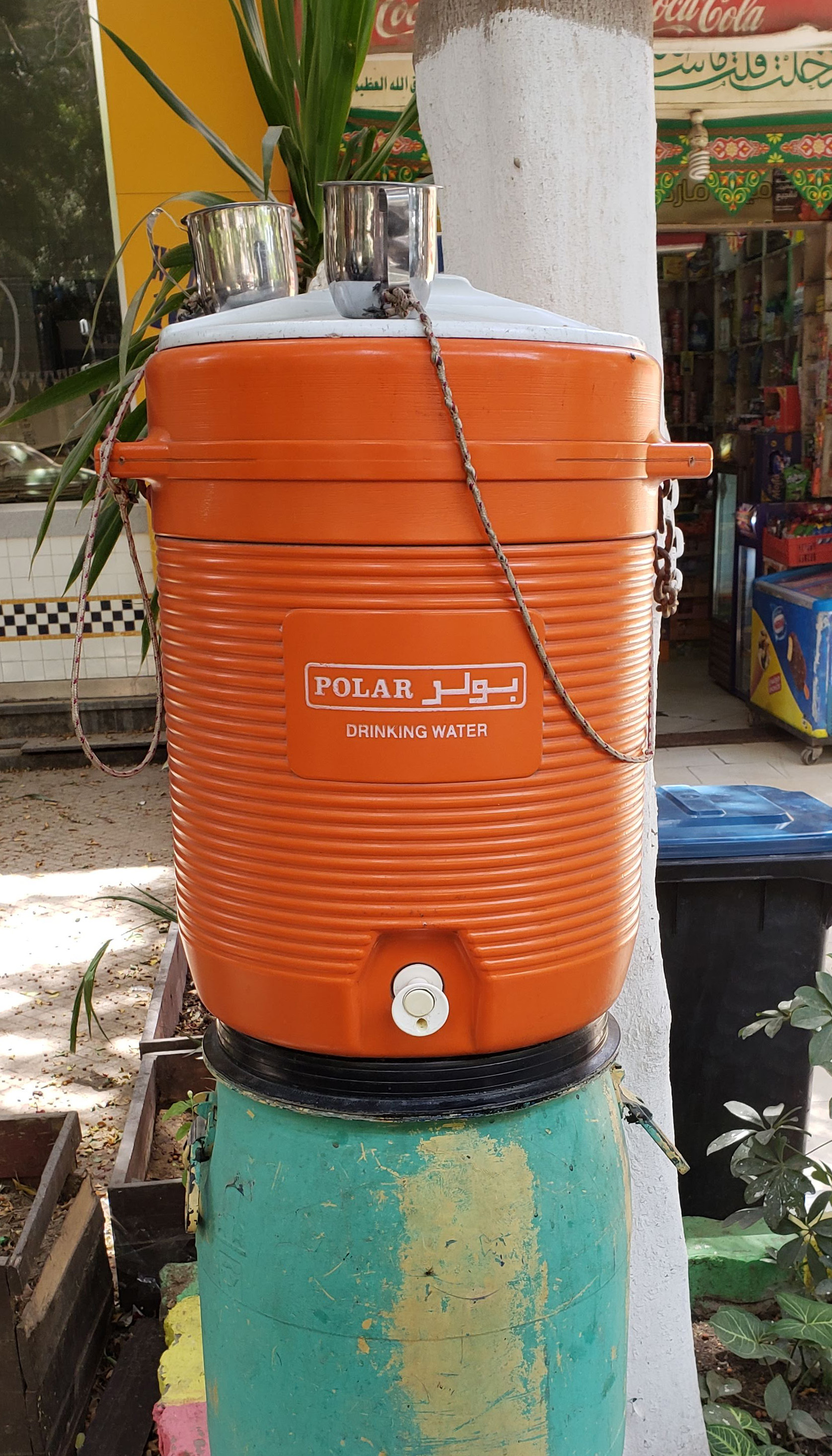
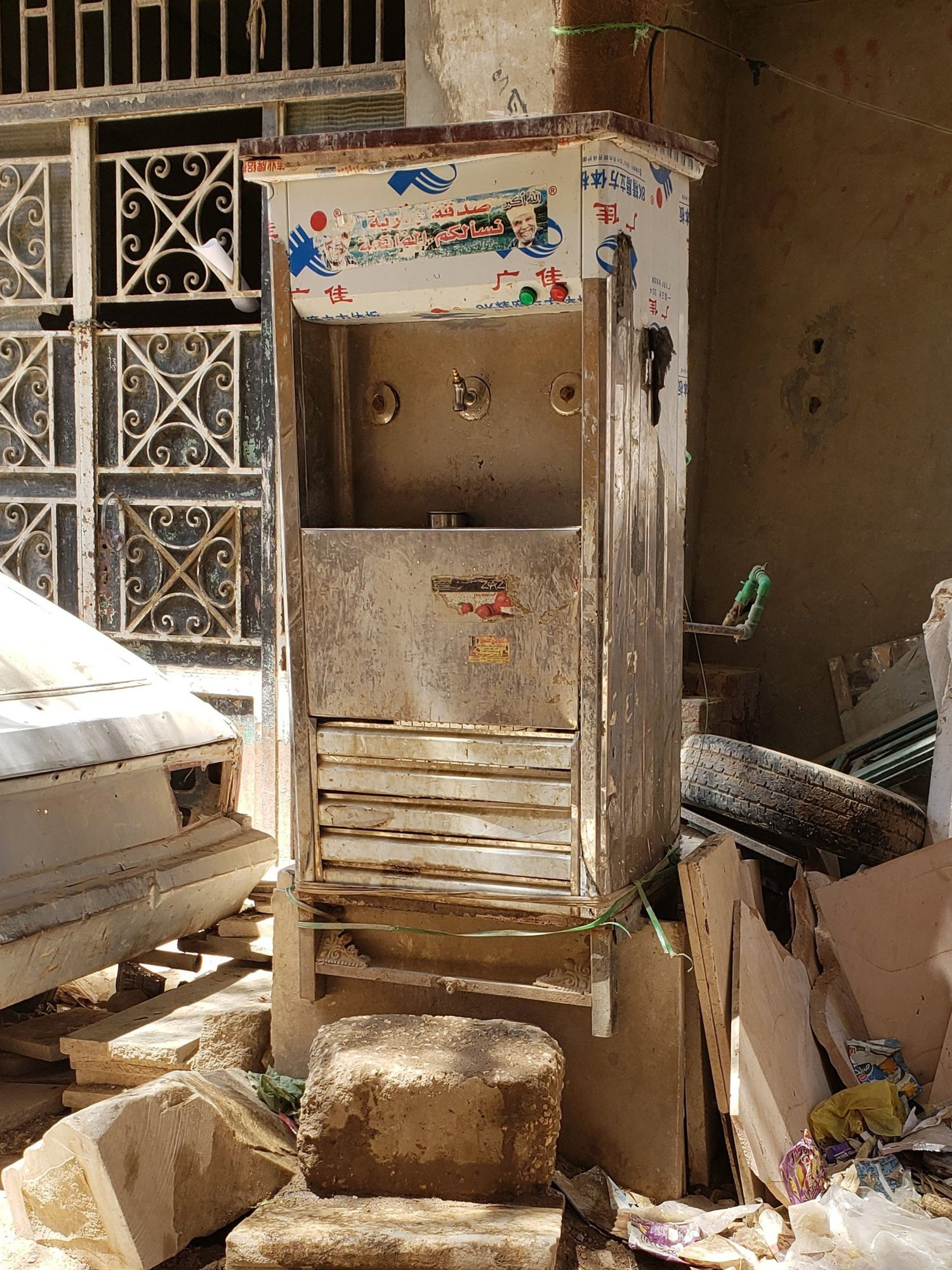
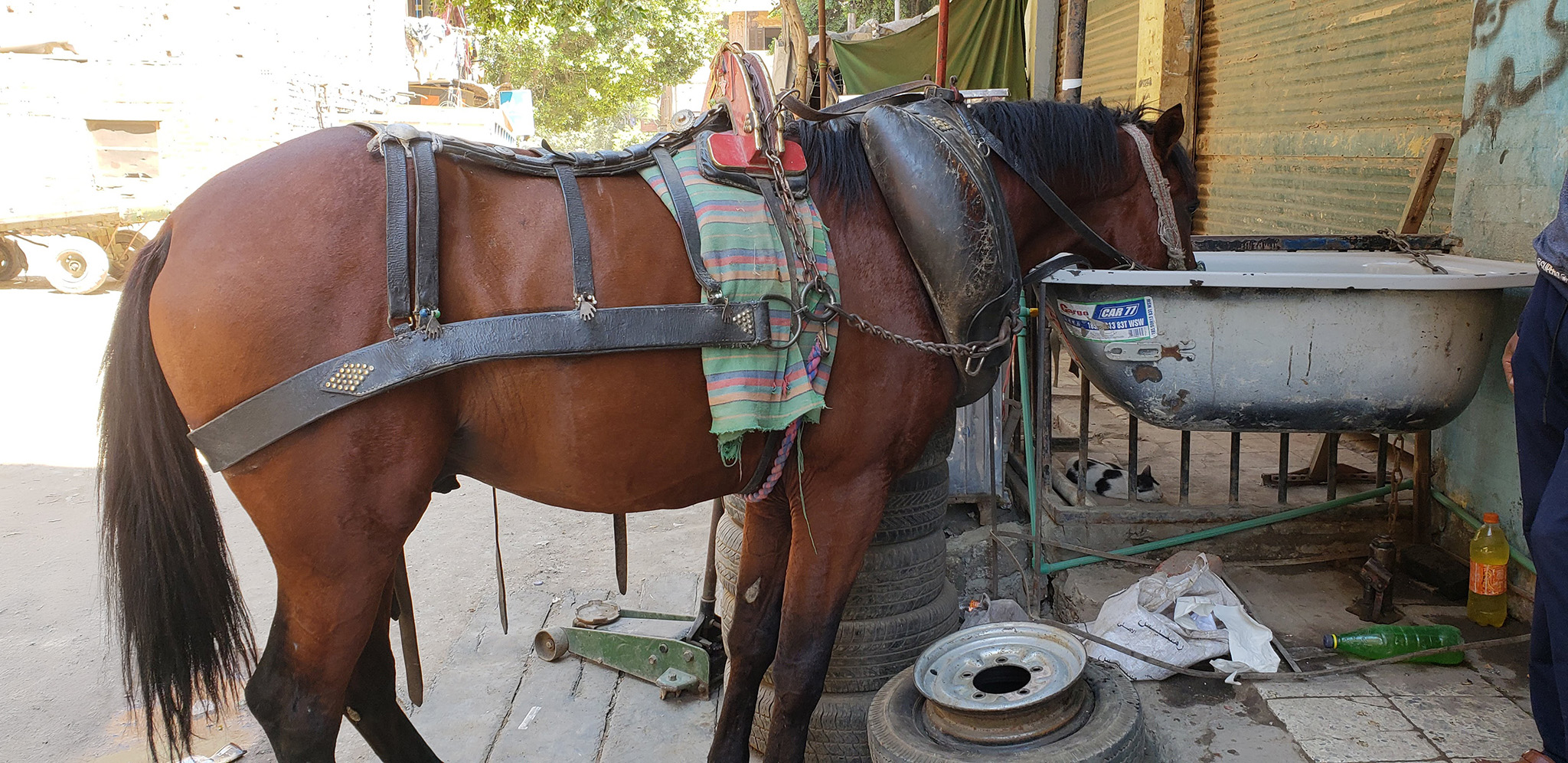
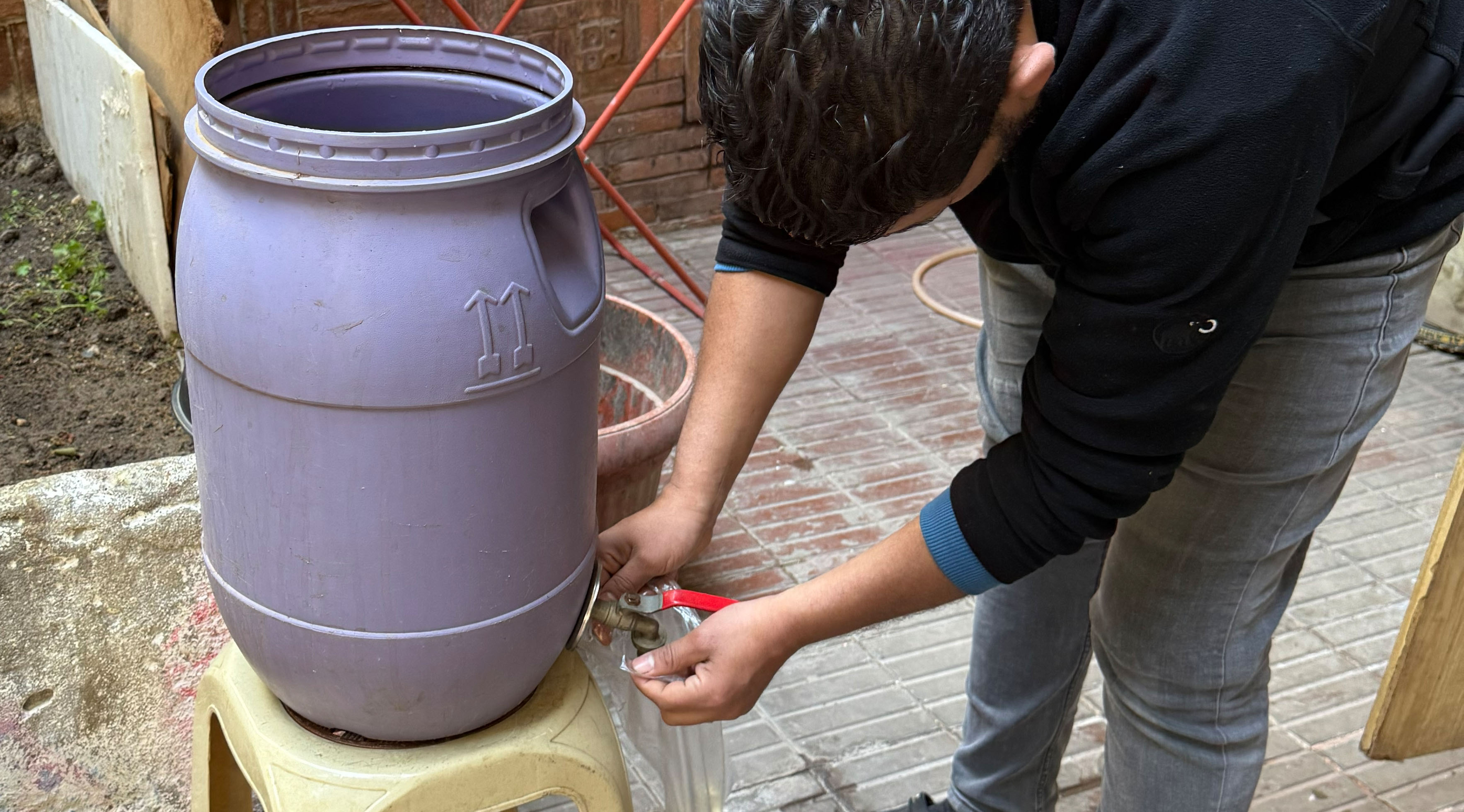
Vernacular Sabīl Types
When most people think of sabīls in Cairo, they think of historic buildings, primarily established during the Mamluk and Ottoman periods, where sabīls are co-located with kuttab (centers for Islamic education). This tradition of gifting water through sabīls has been extended through the proliferation of vernacular sabīls as a means to reshape the built environment to provide palatable and preferred water free of charge to people as they live their daily lives; shopping, traversing and doing business on Cairo’s streets in the “city inside-out” (Bayat 2012). The expansion of these types of sabīls is, in part, a response to the experience of traversing increasingly hot urban spaces and residents’ lived experience of unfolding climate change.