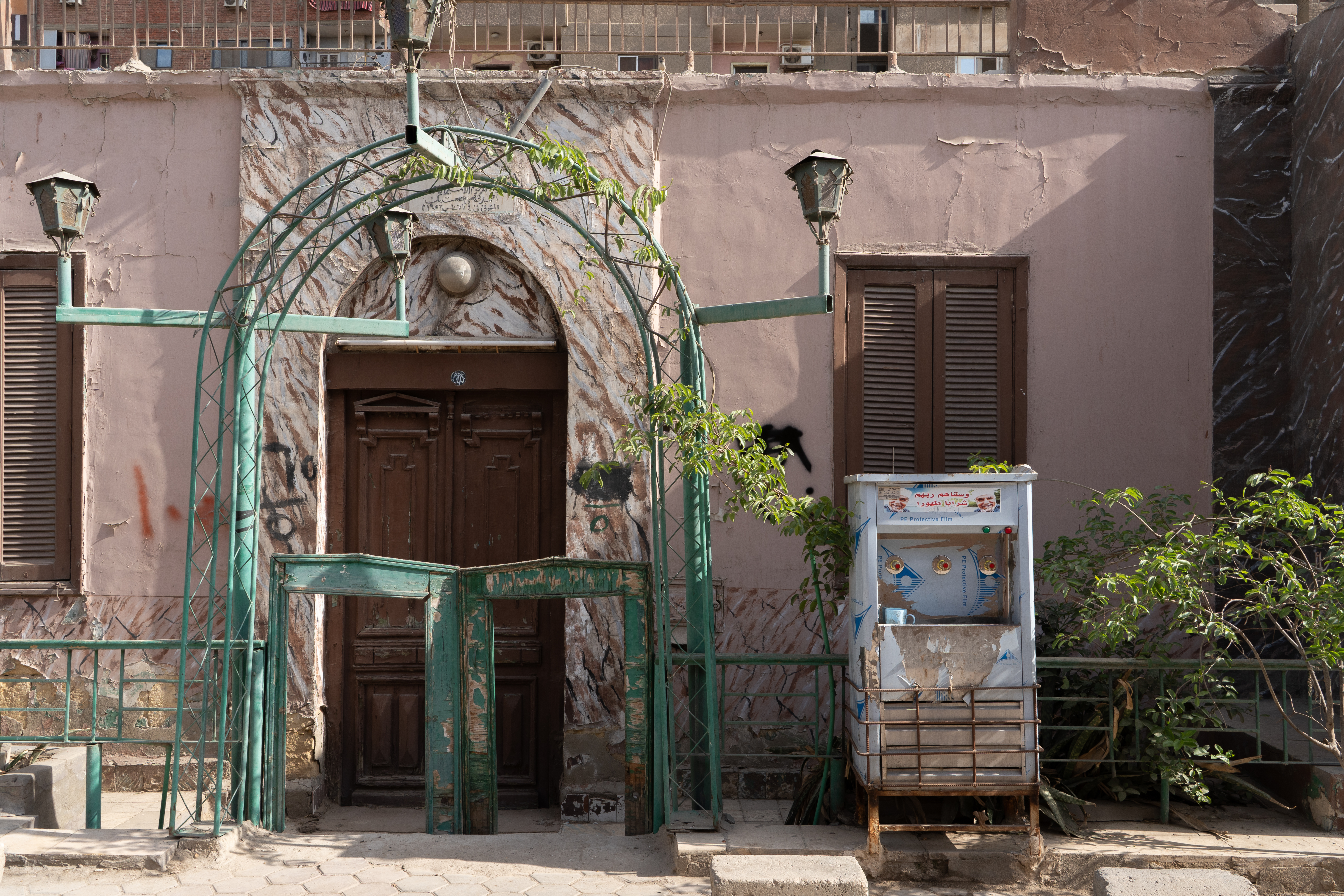
A kuldīr on a street next to a green metal arch in the Arafa neighborhood of Cairo. Photography by Francisca Reis.

A man posing and smiling next to a kuldīr in Darb Al Ahmar. Photography by Francisca Reis.
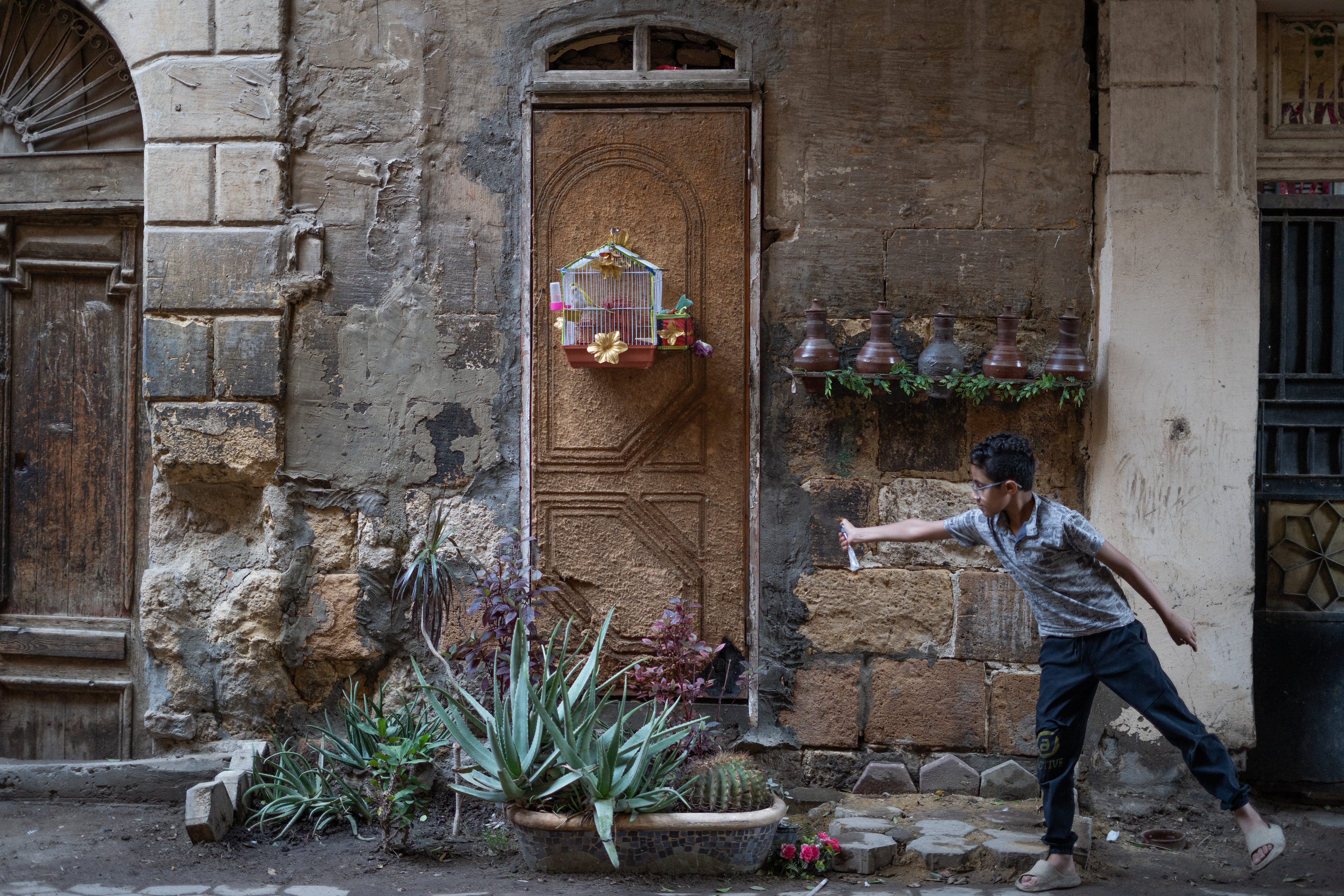
A boy standing in front of a stone building in Khalifa with a series of ullal mounted on the wall. Photography by Francisca Reis.
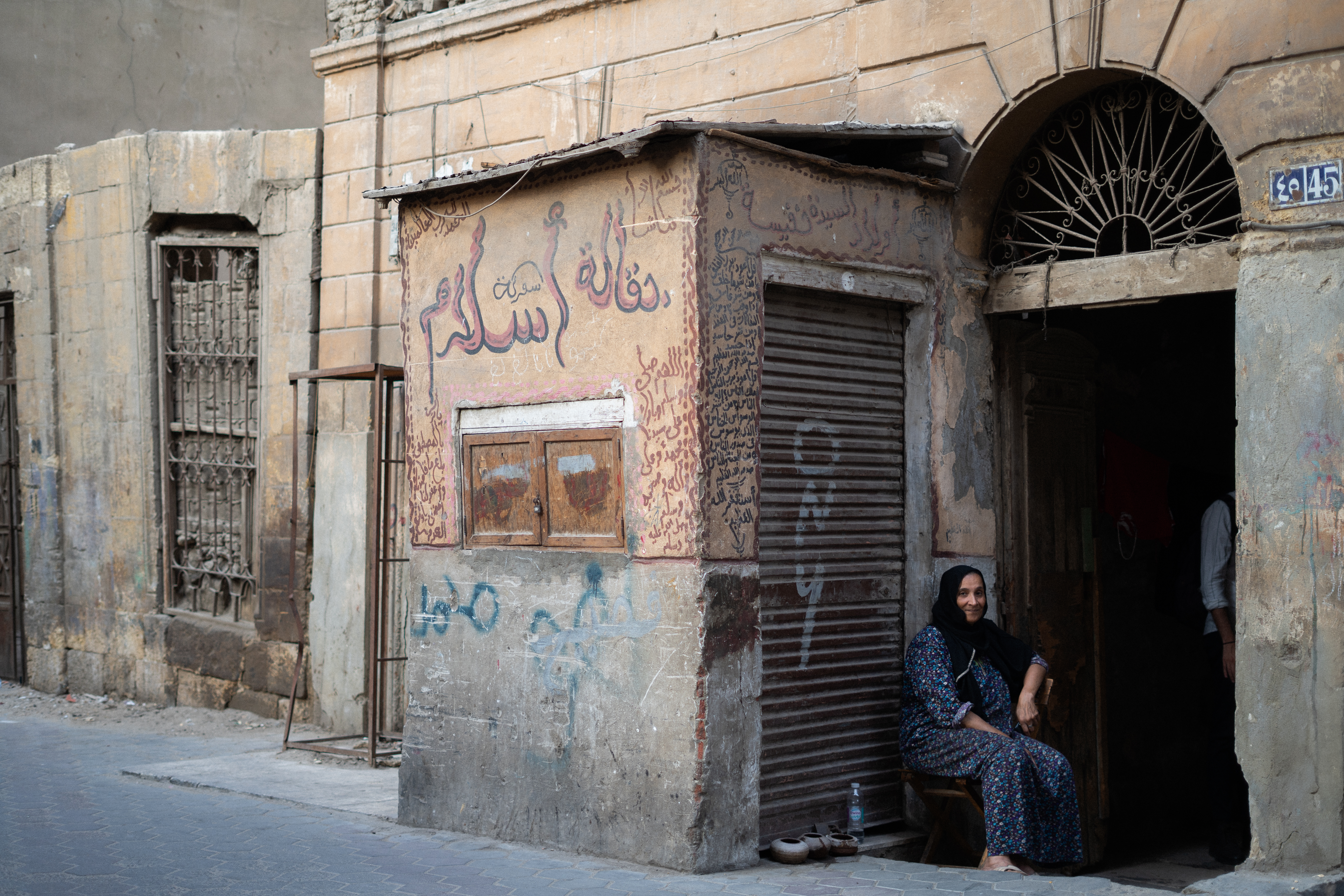
A woman sits outside of a doorway with sabīls for birds resting on the ground in Khalifa. Photography by Francisca Reis.
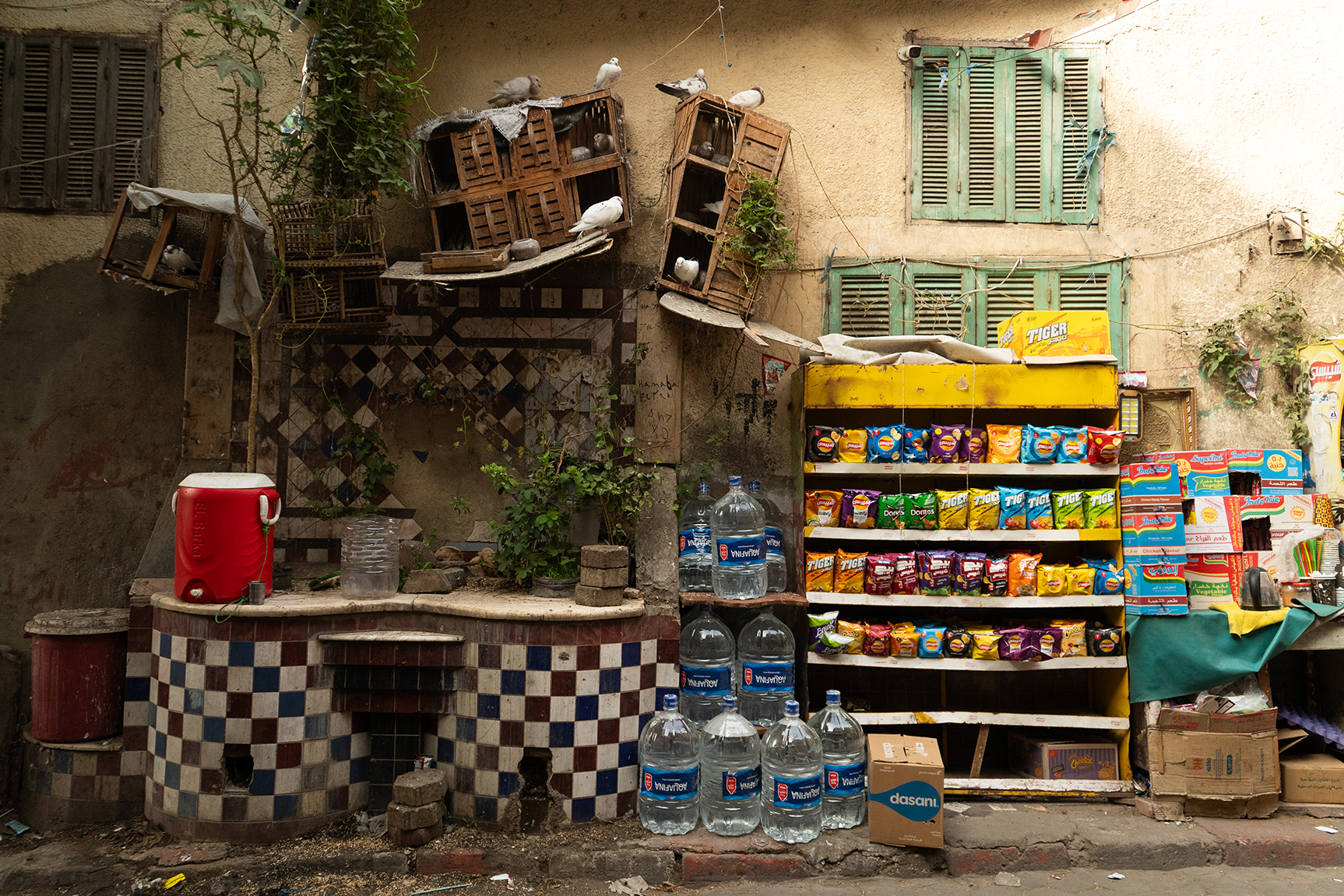
A display of snacks and water on a street in Khalifa. Photography by Francisca Reis.
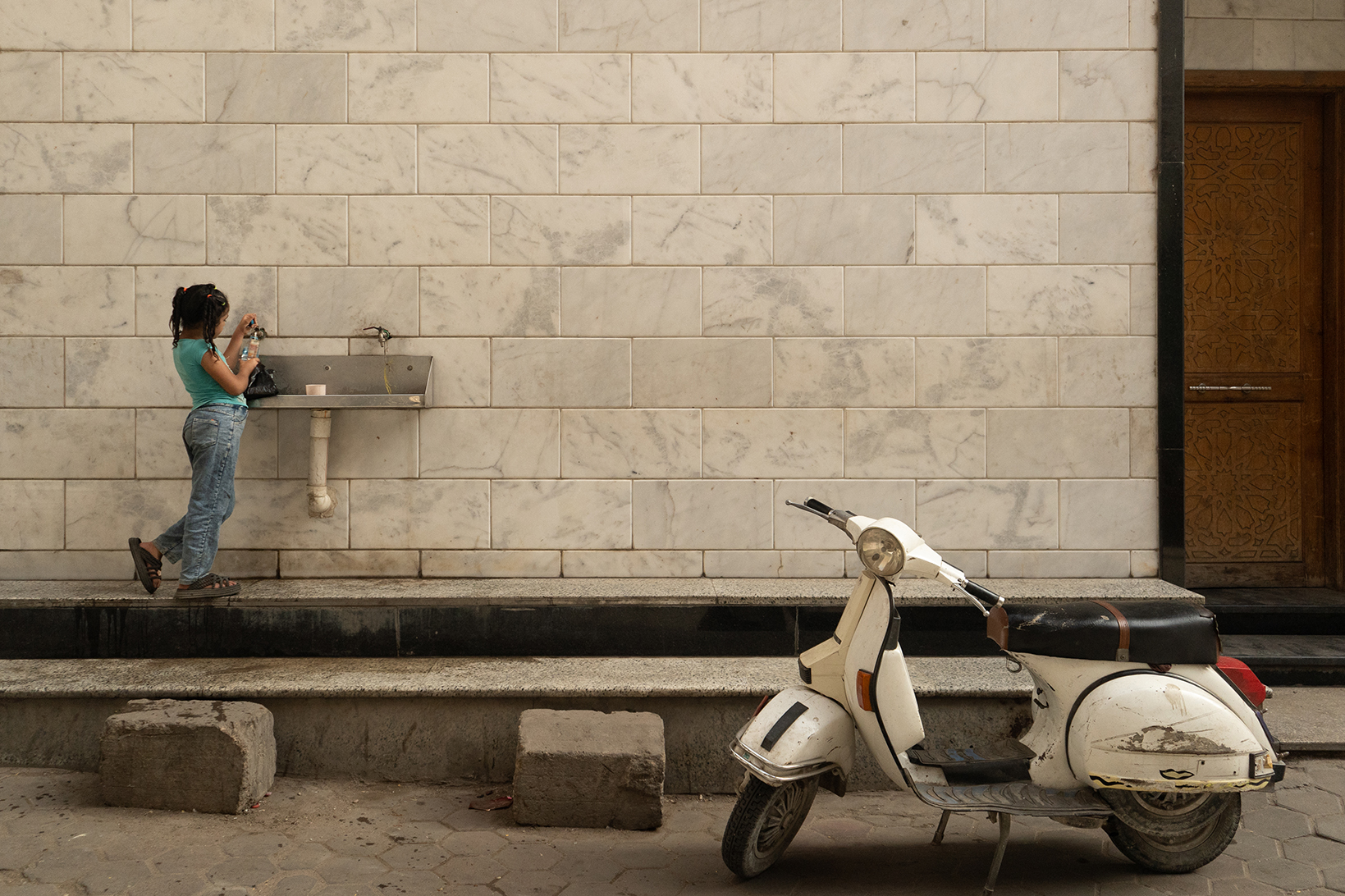
A young girl fills a water bottle from a faucet in the Khalifa neighborhood. Photography by Francisca Reis.